China is an ancient civilization. Buddhism has great impact on China and it is reflected in several historical monuments there. Thankfully, Communist China has not destroyed Buddhist heritage.
1. TERRACOTTA ARMY |LINTONG | 246-208 BC
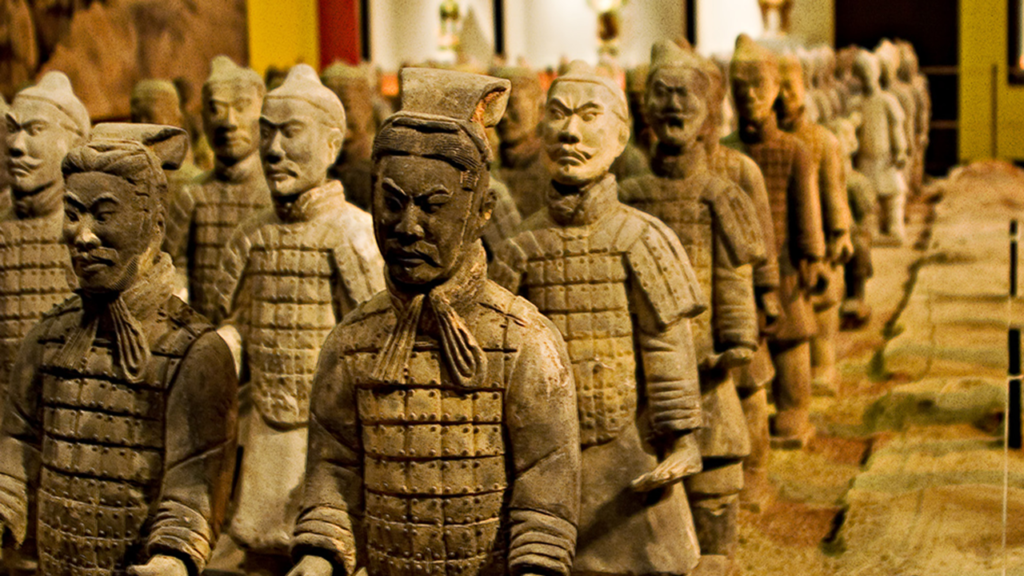
The Terracotta Army is a vast collection (over 8,000 soldiers, 130 chariots, 670 horses ) of life-sized clay soldiers, horses, and chariots buried near Xi’an, China. It was part of the Mausoleum of Qin Shi Huang. They were created to guard the first emperor in the afterlife. It is one of the most significant archaeological discoveries of the 20th century.
2.GREAT WALL OF CHINA | 7TH CENTURY TO 17TH CENTURY
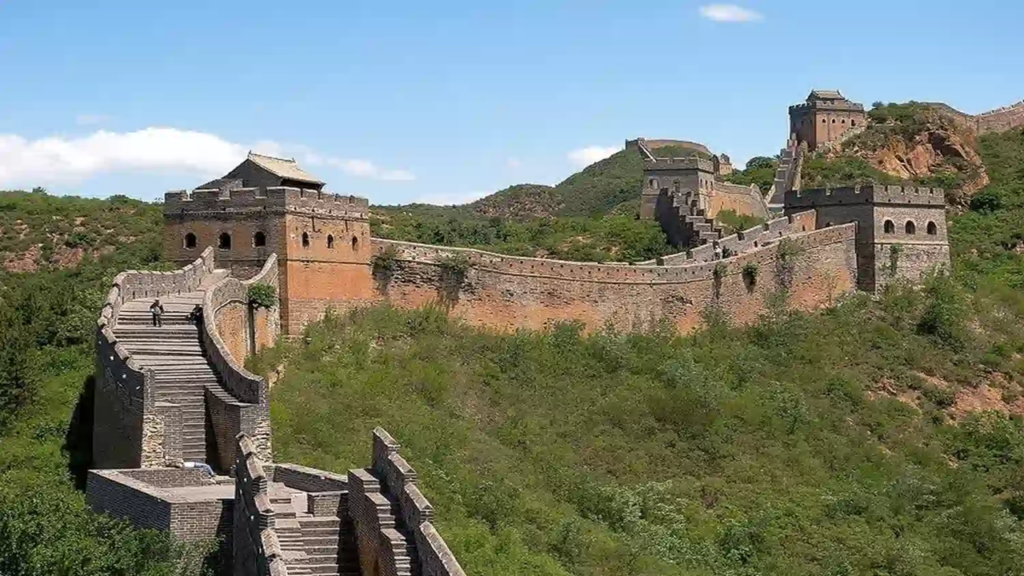
The Great Wall of China is an ancient fortification stretching across northern China, built to protect successive Chinese states from invasions. It is around 21000 kilometers long. It has been built over several centuries. It is considered one of historical wonders.
3. MOGAO CAVES | DUNHUANG | 4TH CENTURY TO 14TH CENTURY
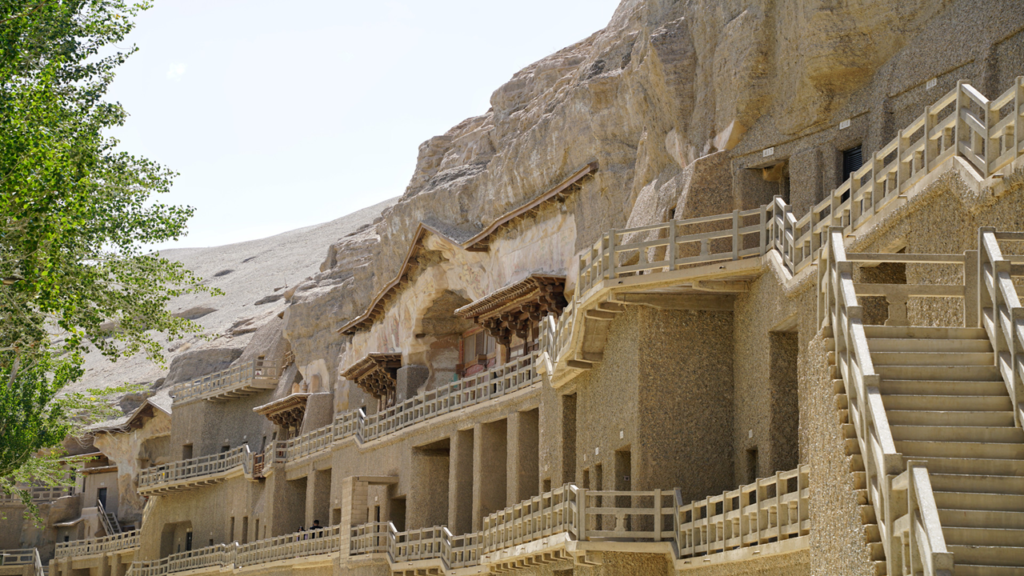
The Mogao Caves, also known as the Mogao Grottoes or the Caves of the Thousand Buddhas. It is a network of Buddhist cave temples near Dunhuang in northwestern China. Over 700 caves are carved into cliffs along the ancient Silk Road, which look amazing.
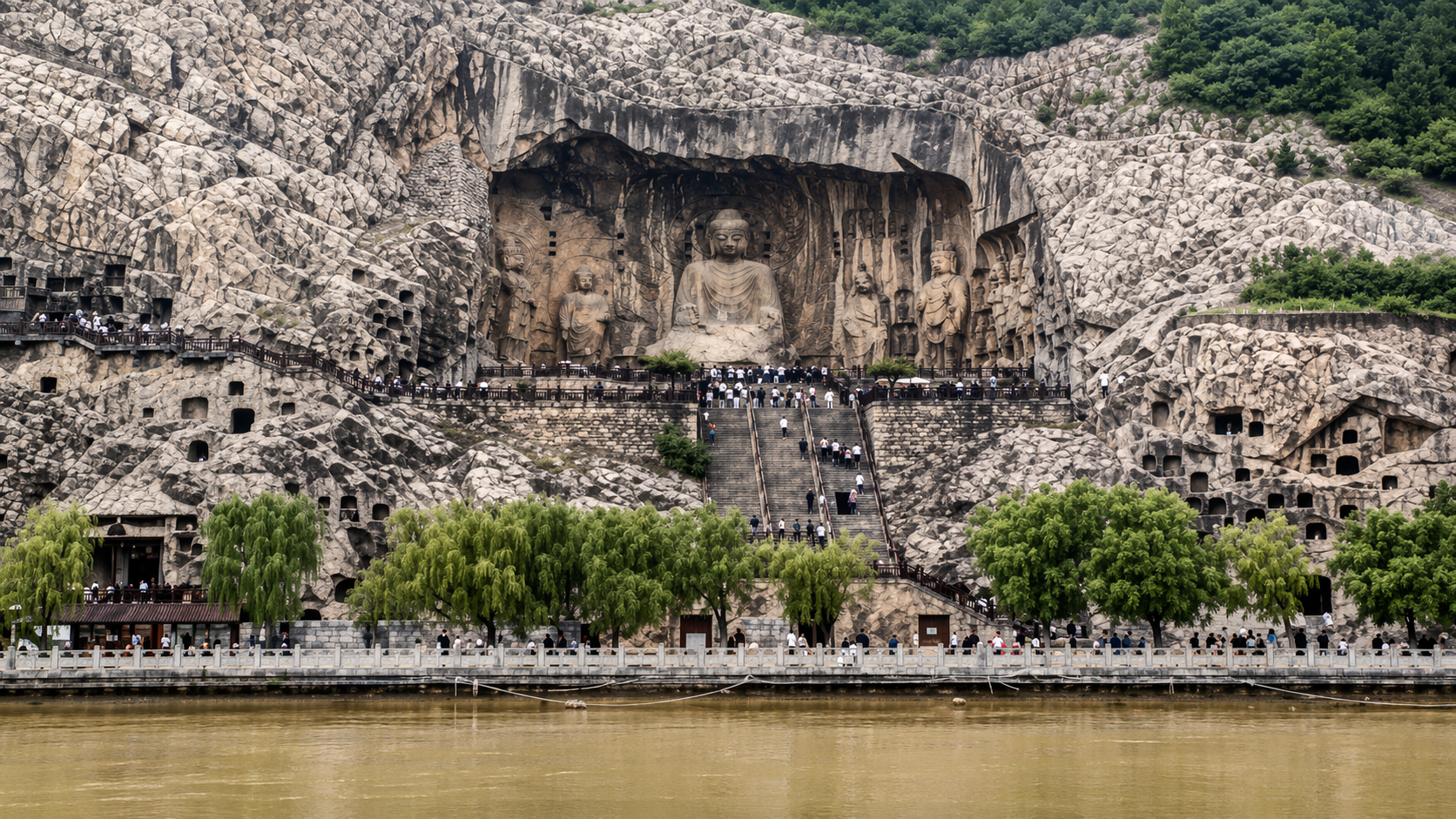
4.LONGMEN GROTTOES |LUOLONG | 5TH CENTURY
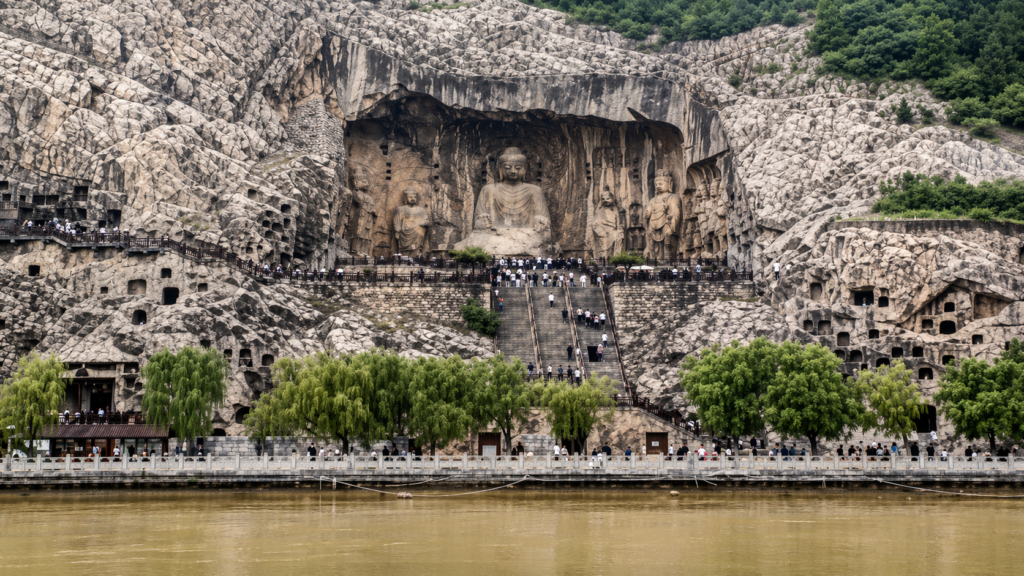
The Longmen Grottoes are an extensive complex of Buddhist cave temples carved into limestone cliffs along the Yi River near Luoyang, Henan Province, China. They have been constructed around 5th Century.
5. GIANT WILD GOOSE PAGODA | XI’AN| 652 AD |
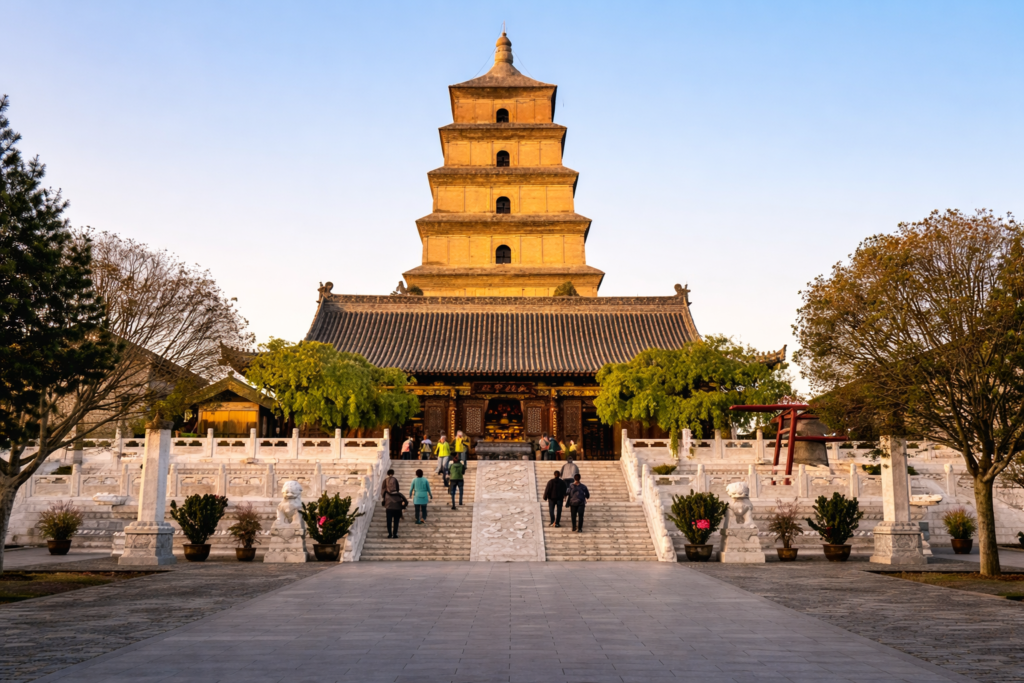
The Giant Wild Goose Pagoda is a Buddhist pagoda. It was built in the 7th century to house Buddhist scriptures and relics brought from India by the monk Xuanzang.
6. MOUNT WUTAI TEMPLES |XINZHOU | 7TH CENTURY
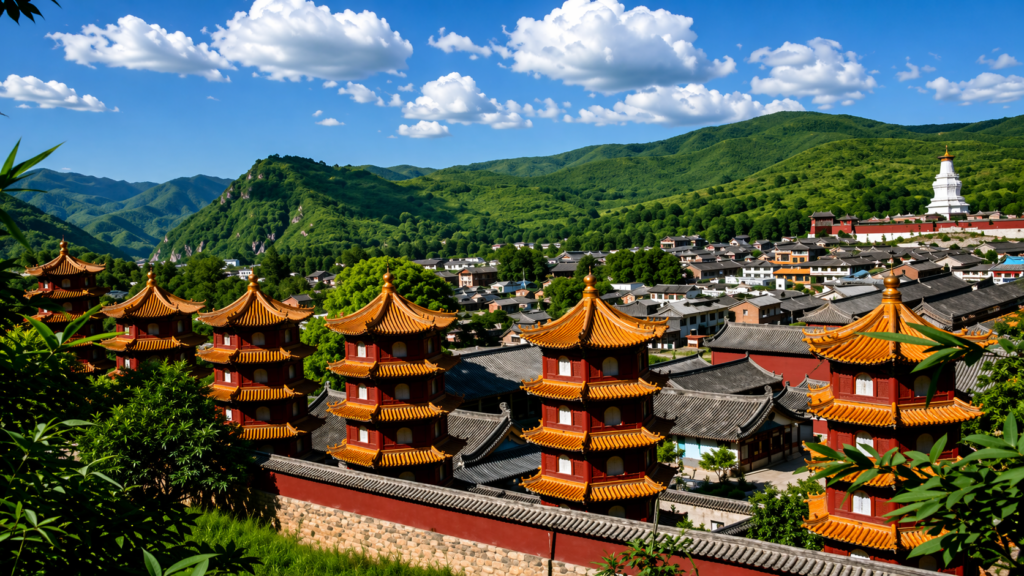
The Mount Wutai Temples form a vast Buddhist temple complex located on Mount Wutai in Shanxi Province, China. It has been a major pilgrim center for Buddhists.
7. DULE TEMPLE | JIZHOU | 7TH CENTURY
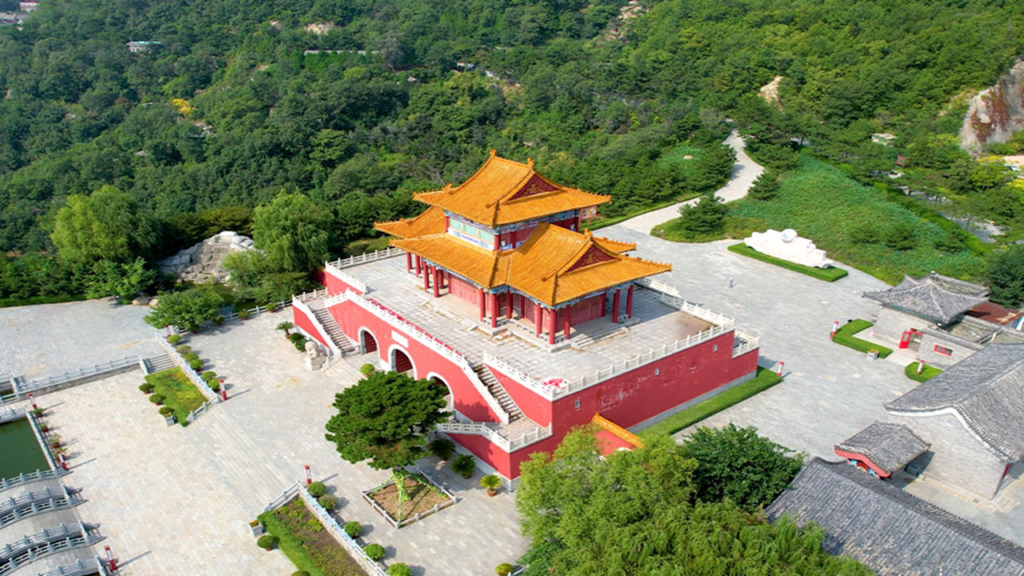
Dule Temple is a historic Buddhist temple located in Jizhou District, Tianjin, China. It is made of timber and as yet surviving.
8. LESHAN GIANT BUDDHA |SHIZHONG | 713-803 AD
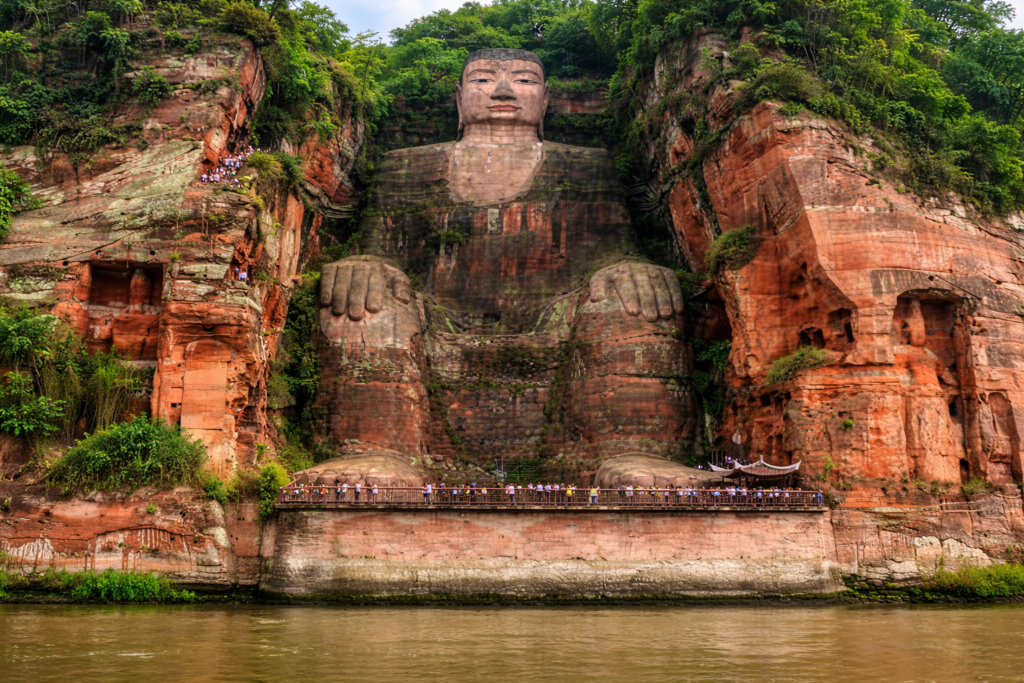
The Leshan Giant Buddha is a giant 71 meter stone statue of the Maitreya Buddha carved into the cliff face of Mount Lingyun in Leshan, Sichuan Province, China. It was constructed in in 803 AD after 90 years of work.
9. IRON PAGODA | KAIFENG | 11TH CENTURY
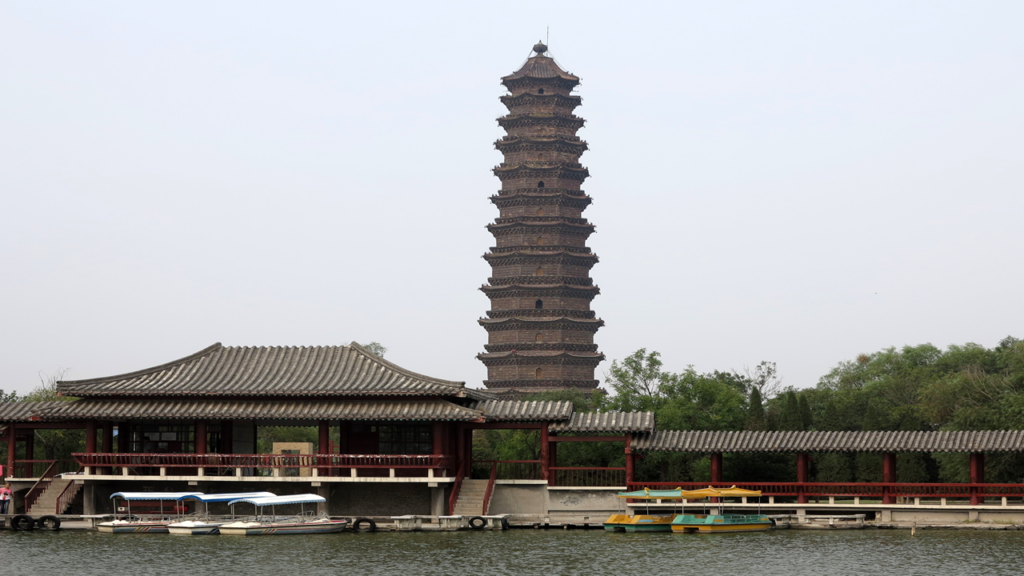
The Iron Pagoda is a historic Buddhist pagoda located in Kaifeng, Henan Province, China. Due to its brick color , it is calle iron pagoda.
10. FORBIDDEN CITY |1406–1420
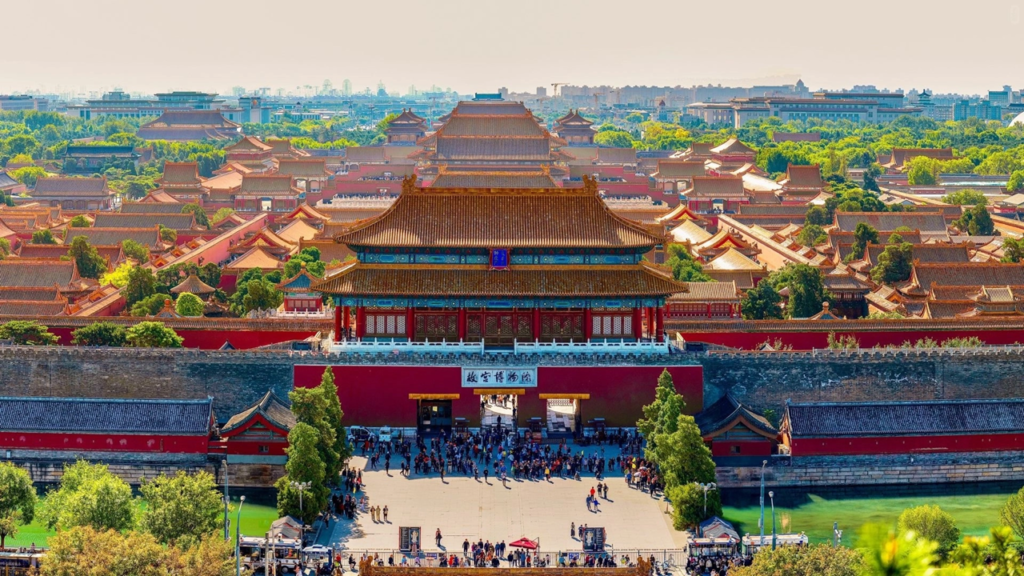
The Forbidden City is the vast imperial palace complex at the center of Beijing, China. It served as seat of power for 24 emperors of the Ming and Qing dynasties from 1420 to 1912. Today it operates as the Palace Museum and stands as one of the world’s best-preserved examples of traditional Chinese architecture.
11. TEMPLE OF HEAVEN | BEIJING | 1420 AD
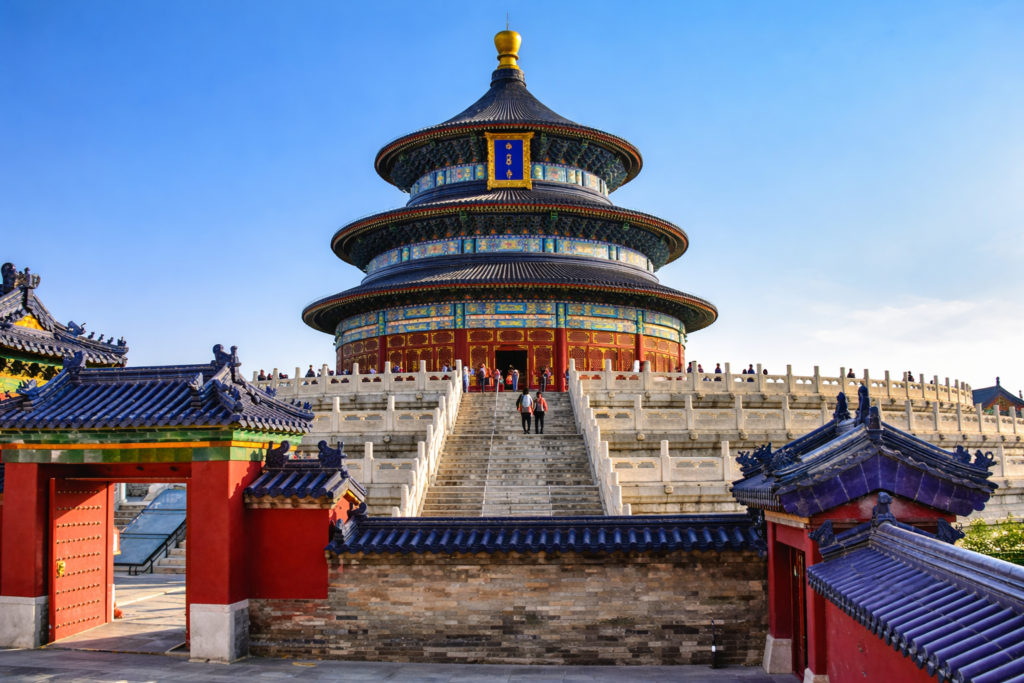
The Temple of Heaven is a vast imperial religious complex in southern Beijing, built in 1420 during the Ming dynasty for emperors to offer sacrifices and pray for good harvests. Regarded as a masterpiece of traditional Chinese architecture, its design embodies the ancient cosmological belief that heaven is round, earth is square.
12. SUN YAT-SEN MAUSOLEUM |PURPLE MOUNTAIN | 1926–1929 |
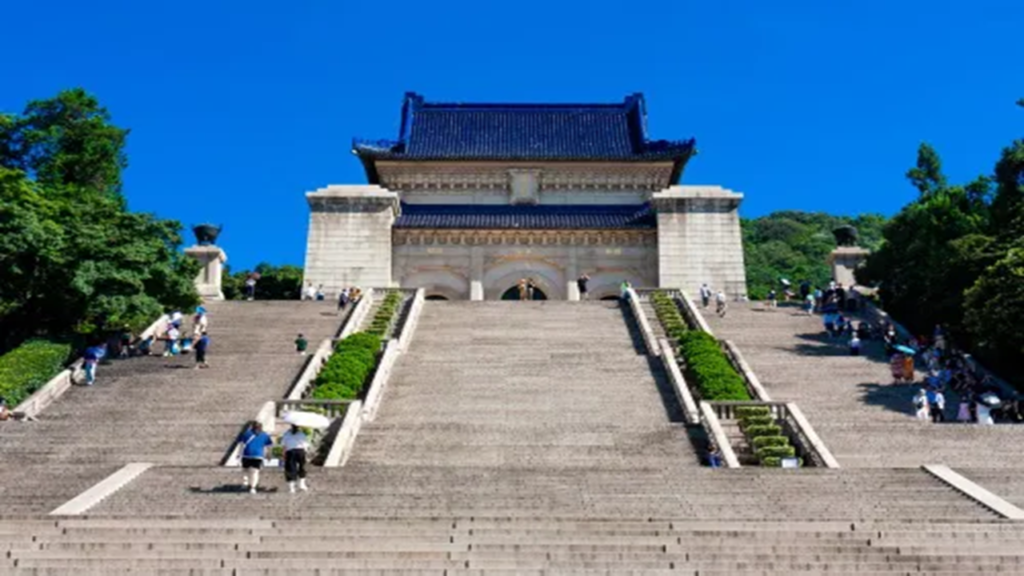
The Sun Yat-sen Mausoleum is the grand memorial and final resting place of revolutionary leader Sun Yat-sen. Located on the southern slope of Purple Mountain in Nanjing, China, it is one of the most important national monuments commemorating the founding of modern China.