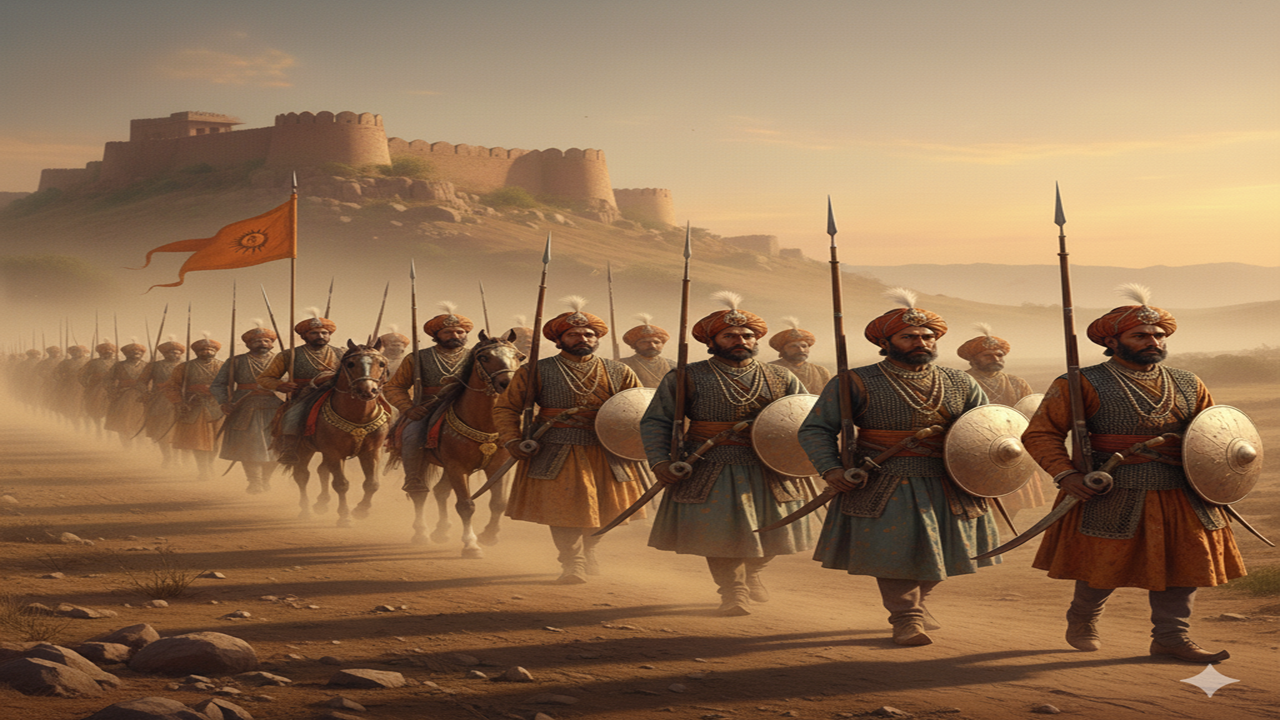
Rajput kingdoms had long served as a defensive barrier on the north-western frontiers of India. However, their decline began after the defeat of Prithviraj Chauhan by Muhammad of Ghor in the Second Battle of Tarain. Prior to this, the Rajputs had ruled over large parts of northern India. During the rule of the Delhi Sultanate and later the Mughal Empire, their power gradually diminished and most Rajput states became confined largely to the region of Rajasthan. The major Rajput kingdoms included Jaisalmer, Marwar, Mewar, Bikaner, and Jaipur.
The Mughal rulers adopted a policy of conciliation towards the Rajputs. Most Rajput rulers accepted a subordinate status under the Mughal Empire, though there were notable exceptions such as Maharana Pratap, who steadfastly resisted Mughal authority and refused to compromise his independence. In return for their loyalty, Rajput nobles were given important military and administrative positions within the Mughal Empire.
With the decline of Mughal power in the eighteenth century, the strength of the Rajput states also weakened. The Rajputs remained disunited and failed to consolidate their power. After the fall of Mughal authority, they faced repeated incursions from the Maratha Confederacy and the Pindaris. Many Rajput states were unable to resist these forces and began paying chauth, a form of tribute, to the Marathas.
After the defeat of the Marathas in the Third Anglo-Maratha War, the major obstacle to the expansion of the East India Company was removed. Consequently, the Rajput states accepted British supremacy without significant resistance.
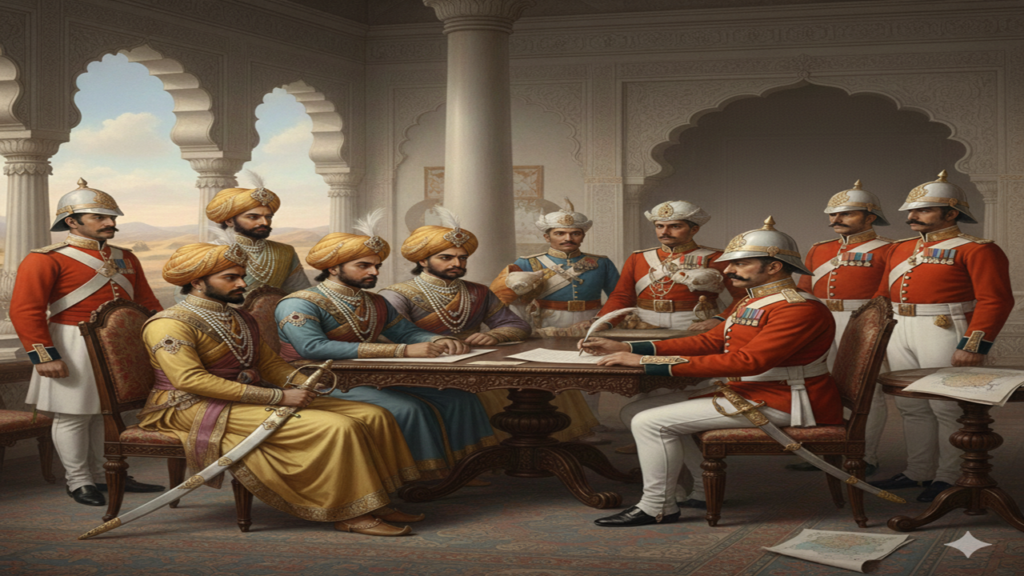
Charles Metcalfe played a key role in negotiating these settlements. In 1818, major Rajput states such as Mewar, Marwar, Jaisalmer, Bikaner, and Amber (Jaipur) entered into subsidiary alliances with the East India Company. Under these treaties, the states agreed to pay tribute, accept the presence of a British Resident at their courts, and relinquish control over their foreign relations. They were also prohibited from declaring war without the permission of the Company.
Later, in 1832, the East India Company established the Rajputana Agency to supervise and control these Rajput states and to regulate their relations with the British government.