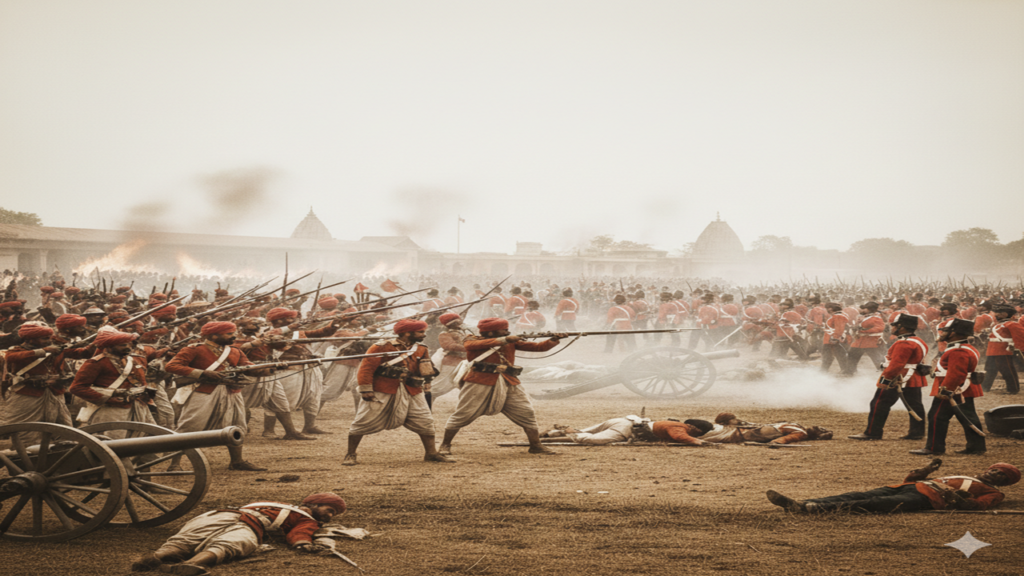
Akbar reigned for about 49 years, from 1556 to 1605. He had five sons. Hassan and Hussain died in infancy. Murad and Daniyal died due to excessive consumption of alcohol and opium. Akbar was also not very impressed with Salim, who later became Jahangir.
Akbar’s favourite was Prince Khusrau, the son of Jahangir. Khusrau was a pampered child and enjoyed his grandfather’s affection. Like his brothers, Jahangir was also addicted to opium. There were rumours that Akbar intended to make Khusrau his successor.
During Akbar’s last years, his relationship with Jahangir became strained. In 1599, Jahangir rebelled while Akbar was on a military campaign in the Deccan. He marched to Allahabad and began issuing coins in his own name, signalling his claim to sovereignty. Jahangir also had a strained relationship with Abul Fazl, the author of the Ain-i-Akbari, as he believed Abul Fazl opposed his accession. On Jahangir’s orders, Abul Fazl was assassinated by Bir Singh Deo Bundela, and his severed head was sent to Allahabad. Akbar handled the situation diplomatically and eventually pardoned Jahangir.
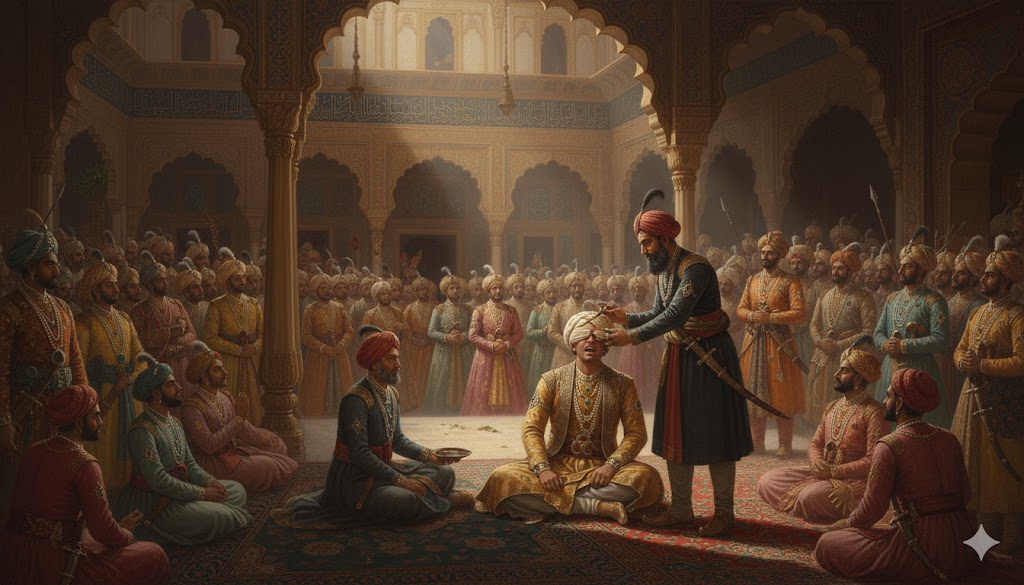
After Akbar’s death in 1605, Jahangir was crowned emperor. Prince Khusrau was confined to his quarters. However, Khusrau soon revolted and marched towards Lahore. Jahangir confronted and defeated him at the Battle of Bhairowal. Khusrau was captured and brought to Delhi. He was chained and paraded through the streets on an elephant. Many of his supporters were impaled along the roads during the procession as a warning to others. In 1607, Khusrau was partially blinded.
Jahangir’s addiction to opium and wine weakened his personal control over administration, and power increasingly shifted to Nur Jahan, a lady of Iranian descent. In 1616, Khusrau’s custody was handed over to Asaf Khan, Nur Jahan’s brother. Later, custody was transferred to Prince Khurram, who would later become Shah Jahan.
Prince Khurram wanted to eliminate Khusrau to remove any possible challenge to his succession after Jahangir’s death. In 1622, Khusrau was strangled to death at Burhanpur on the orders of Shah Jahan.
Subsequently, the sons of Khusrau and the sons of Daniyal were also executed on Shah Jahan’s orders. Thus, the brutal practice of eliminating rival princes in succession struggles became further entrenched in the Mughal Empire.