India and China had traded with the western world since ancient times. Spices, textiles, and several other valuable products were exported to western countries. Most of this trade took place through land routes, the most famous being the Silk Route, which existed from ancient times until the 15th century. These routes were used not only for commerce but also for the exchange of religious, cultural, and artistic ideas. The famous Bamiyan Buddhas of Afghanistan stood along this route and reflected the cultural interactions that took place. Sadly, they were destroyed by extremists in modern times.
The rise of the Ottoman Empire disrupted these traditional land routes. The Ottomans emerged as a powerful force in the 15th century and conquered Constantinople in 1453. At its height, the Ottoman Empire expanded even into Europe. Once they controlled Constantinople and the surrounding regions, they gained dominance over the land routes to Europe and imposed heavy taxes. In addition, trade was controlled by several middlemen. Arab and Venetian merchants had monopolized the Asian trade for nearly seven hundred years, causing the prices of spices and textiles to rise sharply.
Because of this, Europe began desperately searching for an alternative route to India and Asia.
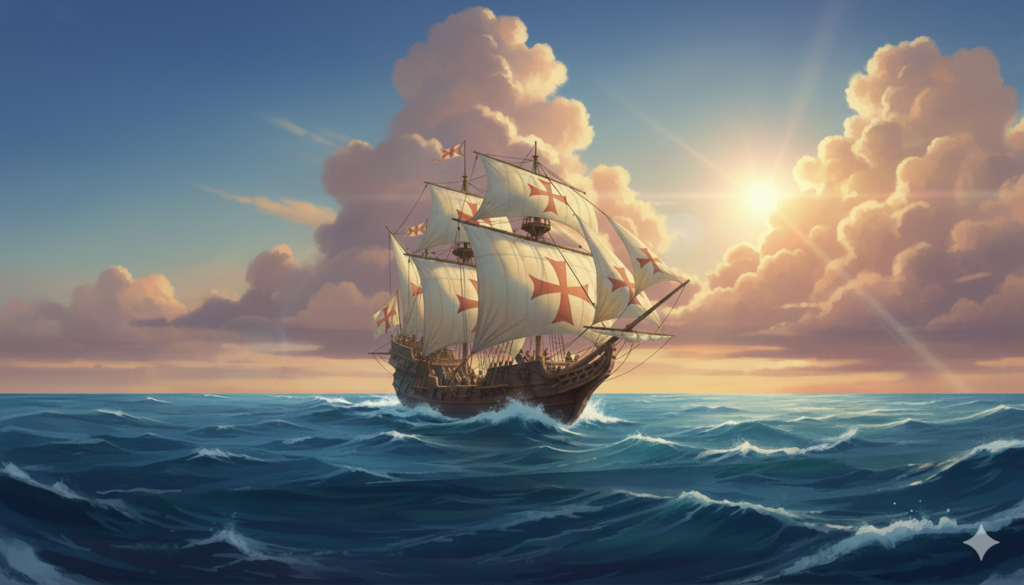
The Portuguese were the first to explore the sea route. Bartholomew Diaz reached the Cape of Good Hope and proved that the Atlantic Ocean and the Indian Ocean were connected. Christopher Columbus sailed westward in search of India but instead reached America, mistakenly believing he had arrived in India—hence the native people came to be called “Indians.” Finally, Vasco da Gama succeeded in reaching India by sea in 1498.
Portugal reaped enormous benefits from this discovery. After the new sea route opened, the prices of spices and textiles in Europe fell by 80–90 percent. The dominance of Arab and Venetian traders ended, and Indian trade provided nearly 65% of Portugal’s revenue. As a result, Portugal became the wealthiest state in Europe in the 16th century. Later, other countries such as England and France entered the competition, ultimately leading to the rise of European colonialism in Asia and the world.