Portugal was the first European country to enter India in 1498 and remained there until 1961. Vasco da Gama of Portugal discovered a new trade route to India via the Cape of Good Hope and arrived at Calicut. Although he was received with dignity by the Zamorin of Calicut, Portugal was not granted a monopoly over the spice trade. This led to conflicts, and the Portuguese factory at Calicut was destroyed.
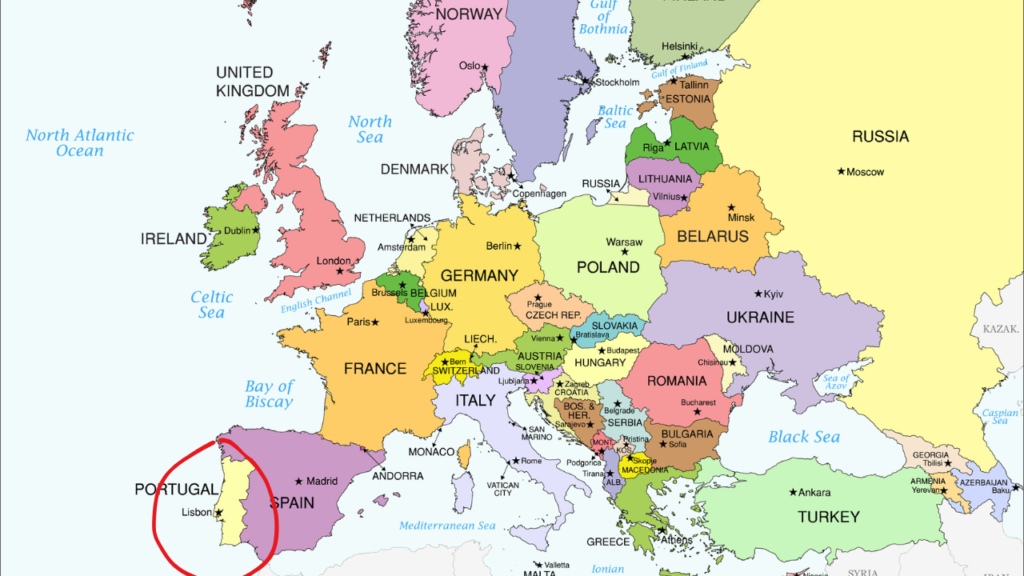
The rulers of Cochin, seeking an ally against the Zamorin, welcomed the Portuguese. The first Portuguese factory in India was established at Cochin, and later, Fort Emmanuel was constructed to secure their position.
In 1510, the Portuguese captured Goa from the Adil Shahi Kingdom of Bijapur, which subsequently became the capital of their eastern empire in India. The seven islands of Bombay, along with Bassein and Diu, were under the control of Bahadur Shah of Gujarat. Facing pressures from both the Portuguese and the Mughals, Bahadur Shah signed the Treaty of Bassein in 1534, ceding these territories to Portugal. The Portuguese later captured Daman from Gujarat in 1559, which was formally confirmed by the Treaty of Surat.
Portugal also established trading posts on the eastern coast at Masulipatnam, Nagapattinam, and others, but these were less significant than the western coast settlements.
The decline of Portuguese power in India began around 1600, especially with the rise of the Dutch East India Company in 1602, which captured several Portuguese trading posts, including Cochin, Cannanore, Masulipatnam, and Nagapattinam.
Bombay was later given to England as dowry when Princess Catherine of Portugal married Charles II, and the East India Company leased it at £10 per year. Bassein was captured by the Marathas in 1739. At the time of Indian independence in 1947, Portugal still controlled Goa, Daman, Diu, and Dadra & Nagar Haveli. These territories were integrated into India after independence.