Babur laid a strong foundation for the Mughal Empire by defeating Ibrahim Lodi at Panipat, Rana Sanga at Khanwa, and the Afghans in Bihar and Bengal. Yet, the greatest challenge to the Mughal Empire did not come from a powerful monarch but from an ordinary jagirdar of Sasaram — Sher Shah Suri. Though Sher Shah destroyed the Mughal Empire completely during his time, it was another matter that Humayun later recovered his lost dominions after Sher Shah’s death.
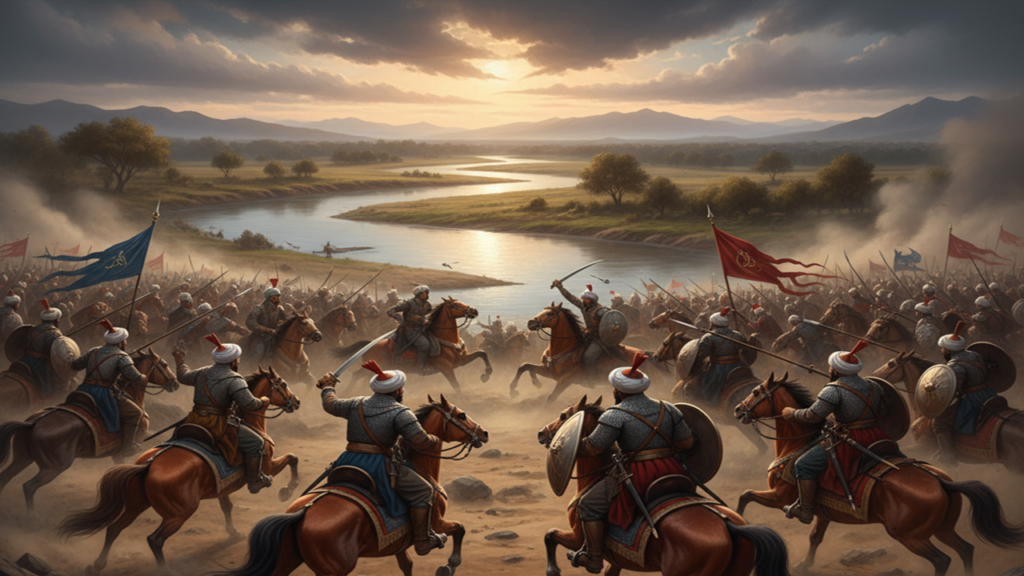
Babur died in 1530, leaving behind four sons — Humayun, Kamran, Hindal, and Askari. In his will, Babur suggested a division of his dominions among his sons. Humayun succeeded him at Delhi; Kamran received Kabul and Kandahar; Askari got Sambhal, and Hindal was granted Mewat.
Upon ascending the throne, Humayun faced two major challenges — from Bahadur Shah of Gujarat in the west and from Afghans in Bihar and Bengal in the east.
Sher Shah, originally named Farid, was the grandson of a horse trader. His father, Hasan Khan, somehow obtained the jagir of Sasaram in Bihar. Farid was once awarded the title “Sher Khan” after killing a lion and later became famous as Sher Shah. He managed his family’s jagir for about twenty-one years but temporarily lost it due to family disputes. After his father’s death, he regained the jagir from Ibrahim Lodi.
When Babur conquered India, Sher Shah visited him and entered Mughal service. Babur confirmed him as the jagirdar of Sasaram. After Babur’s death, Sher Shah began consolidating his power in Bihar and Bengal, soon emerging as a formidable rival to Humayun
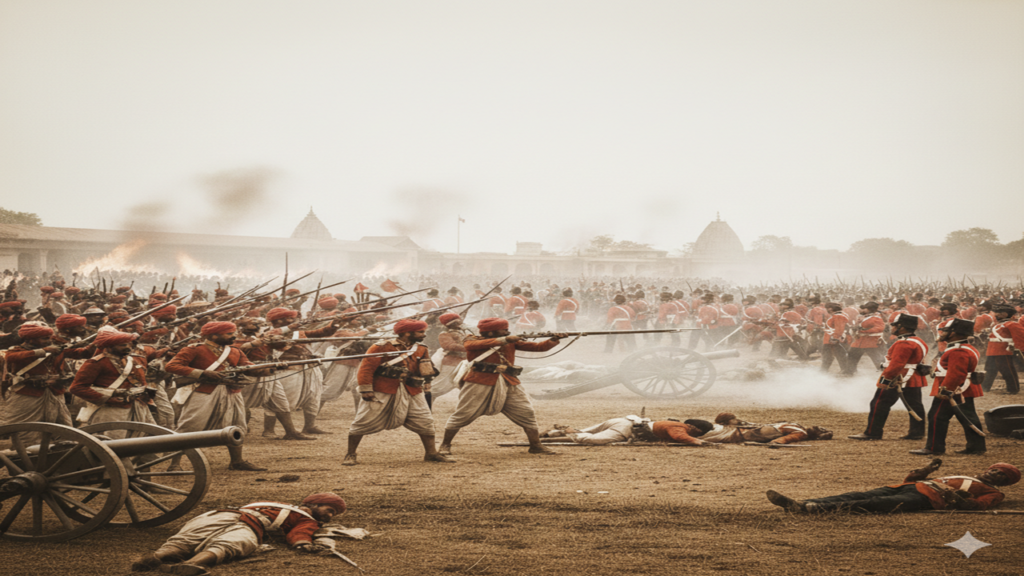
Humayun marched eastward to subdue Sher Shah, but in the Battle of Chausa (1539), he suffered a disastrous defeat. Barely escaping with his life, Humayun fled to Agra. His brother Kamran, however, refused to assist him and withdrew to Lahore.
In the following year, Sher Shah decisively defeated Humayun in the Battle of Kannauj (1540), capturing Delhi and Agra. With this, the Mughal Empire temporarily collapsed, and Sher Shah became the ruler of northern India.
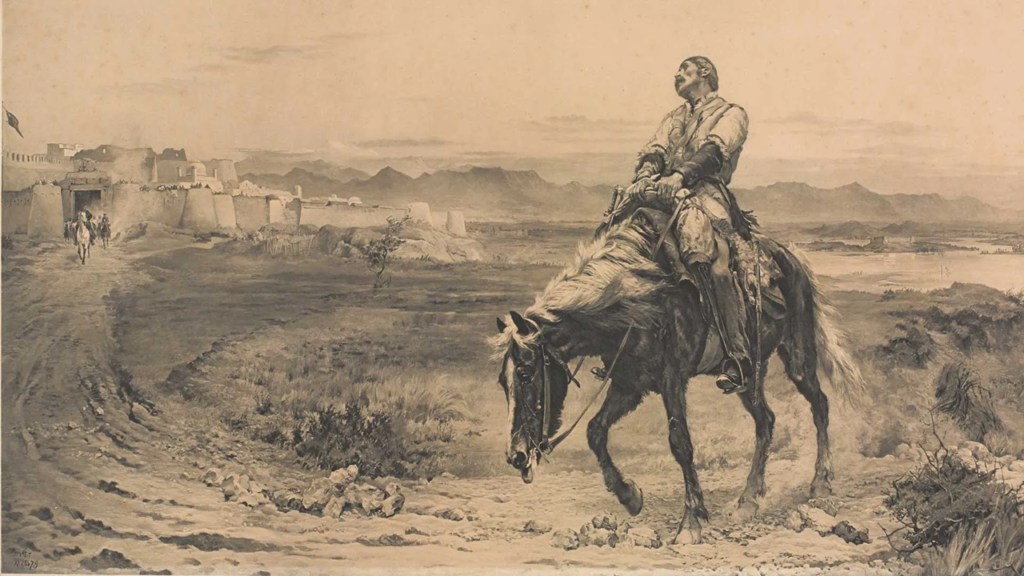
Humayun retreated from one place to another — from Agra to Delhi, then to Lahore — pursued relentlessly by Sher Shah. He offered Sher Shah a compromise, proposing that the Mughals rule Punjab while Sher Shah controlled Hindustan. Sher Shah rejected the offer, suggesting instead that Humayun should retire to Kabul and leave Lahore.
Abandoned by his brothers, Humayun fled further west. He reached Amarkot, a Rajput principality, where his son Akbar was born. From there, he moved to Sindh, reorganized his small army, and advanced toward Kandahar, then ruled by Kamran. However, Kamran sent an army under Askari to confront Humayun, forcing him once again to flee — this time to Persia (modern Iran). He also left behind the infant Akbar, who was taken to Kabul by Askari.
Sher Shah, meanwhile, continued expanding his dominion. He annexed Malwa, Rajasthan, and extended his control over much of northern India. His administrative reforms — particularly in land revenue, road building, and governance — became the model for later Mughal rulers.
In 1545, while besieging the fort of Kalinjar in Bundelkhand, Sher Shah died in an accidental gunpowder explosion.