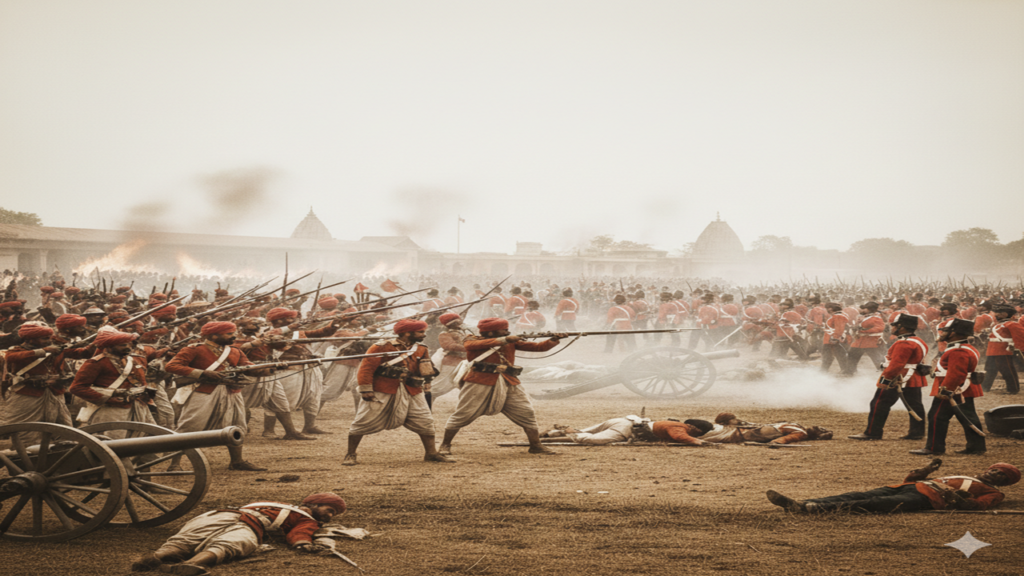
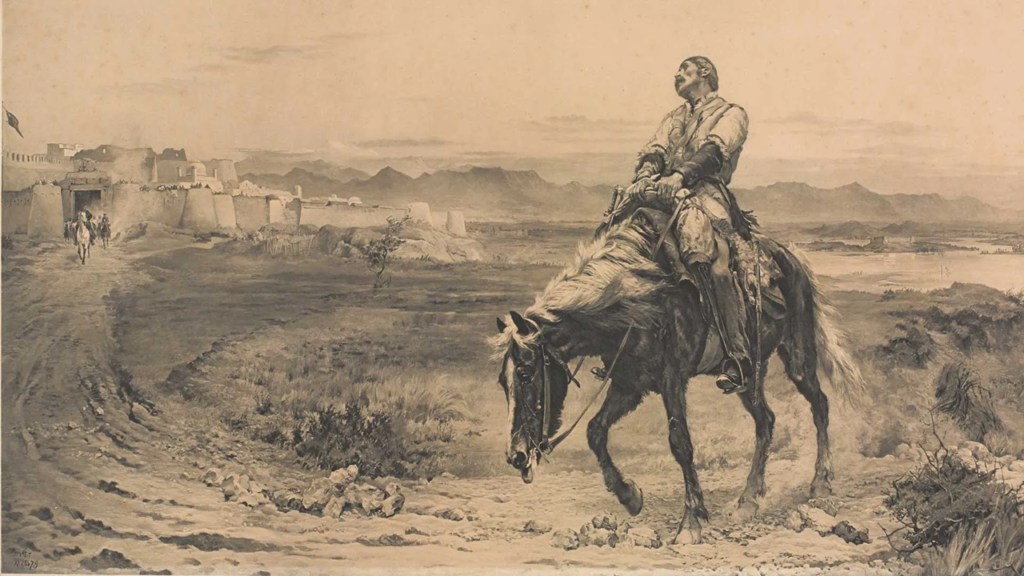
After Bengal, the next major Indian kingdom to be annexed by the East India Company was Mysore. However, Mysore offered one of the toughest resistances to British expansion. The armies of Hyder Ali and Tipu Sultan were among the most advanced in India. They even used sophisticated rockets in warfare, a technology not yet fully developed by the Company. Ultimately, only with the support of the Nizam of Hyderabad and the Marathas could the Company defeat Mysore after four wars, the last ending in 1799.
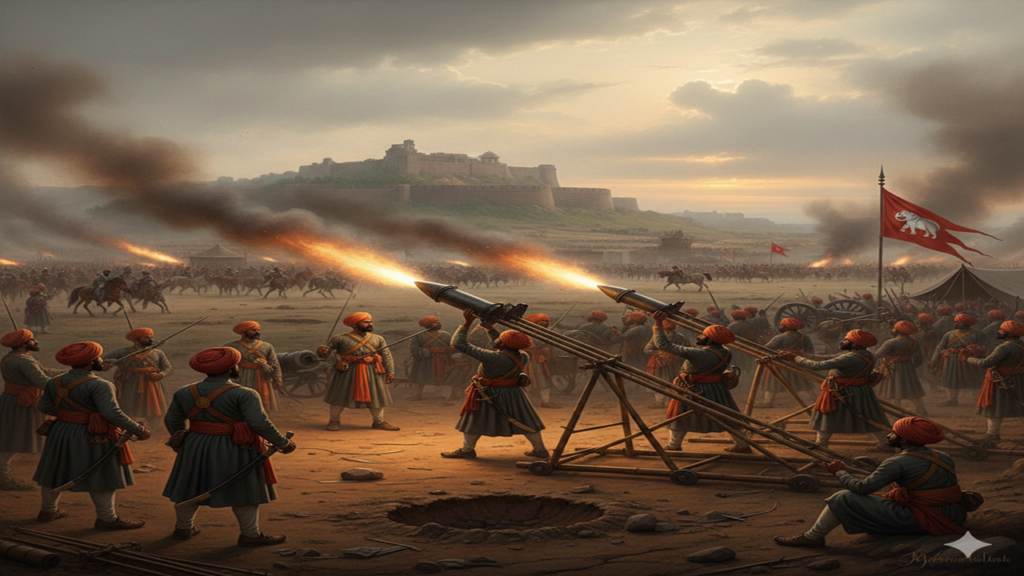
Mysore largely corresponds to present-day Karnataka. It was long ruled by the Wodeyar dynasty, who were initially vassals of the Vijayanagara Empire. After the decline of Vijayanagara, Mysore became independent. Hyder Ali began his career as an ordinary soldier but rose rapidly through merit and military skill. Eventually, he usurped power and became the de facto ruler of Mysore, while the Wodeyar kings were reduced to figureheads. Hyder Ali expanded Mysore’s territory and gained control over the Malabar Coast, an important region for trade.
The East India Company entered into an alliance with the Nizam for protection against Mysore in exchange for the Northern Circars. Subsequently, the Marathas, the Nizam, and the Company formed a triple alliance against Mysore.
First Anglo-Mysore War (1767–1769)
Several engagements between Hyder Ali and the Company remained inconclusive. In 1769, Hyder Ali boldly marched towards Madras and laid siege to Fort St. George, alarming the British. The war ended with the Treaty of Madras, which included a mutual defence clause.
Second Anglo-Mysore War (1780–1784)
The Company breached the mutual defence clause when it failed to support Mysore during a Maratha attack in 1771. Tensions further escalated when the Company captured the French settlement of Mahe in 1779, an ally of Hyder Ali.
Hyder Ali formed an alliance with the Nizam and the Marathas and launched a powerful attack in the Carnatic. He captured Arcot and inflicted a severe defeat on the British forces led by William Baillie. However, Sir Eyre Coote arrived from Bengal and halted Hyder’s advance. Hyder Ali suffered setbacks at battles such as Porto Novo.
Hyder Ali died in 1782, and Tipu Sultan succeeded him. Tipu continued the war vigorously and achieved significant successes, including capturing an entire British battalion and seizing Mangalore. The conflict concluded with the Treaty of Mangalore. This treaty is significant as it was one of the last instances where an Indian ruler dictated terms to the East India Company.
Third Anglo-Mysore War (1790–1792)
In 1789, Tipu Sultan attacked Travancore, a British ally. The Company seized this as an opportunity to curb Mysore’s power. A grand alliance was formed between the Company, the Nizam, and the Marathas under the leadership of Lord Cornwallis. Cornwallis advanced and captured Seringapatam.
The war ended with the Treaty of Seringapatam. Tipu had to cede nearly half of his territory, which was divided among the Company, the Nizam, and the Marathas. The British acquired Malabar, Dindigul, and Baramahal—strategically important regions. Tipu was also forced to pay a heavy indemnity of three crore rupees. As he could not immediately pay the amount, two of his sons were taken as hostages.
Fourth Anglo-Mysore War (1799)
After regaining his sons, Tipu began preparing for revenge. He sought assistance from France and the Ottoman Empire. The British, suspicious of his foreign alliances, launched a final campaign. In 1799, British forces under Lord Wellesley and General Harris attacked Mysore. Tipu Sultan was killed while defending Seringapatam.
After his death, the Wodeyar dynasty was restored, but Mysore was compelled to accept a subsidiary alliance with the Company, effectively becoming a dependent state. Thus ended one of the most formidable resistances to British expansion in India.