The civilization of Iran is as ancient as the civilization of India. Iran was historically known as Persia and has been the centre of several great civilizations. In ancient times the people of Iran followed Zoroastrianism, whose sacred text is the Avesta (commonly called Zend Avesta), which is considered as ancient as the Rigveda of India.
Iran was the homeland of the great Achaemenid Empire, also known as the Persian Empire, which flourished around the 6th–4th centuries BCE and ruled vast territories from Iran. This powerful empire was conquered by Alexander the Great in 330 BCE, after which the Seleucid Empire was established by Seleucus I Nicator. Later, Iran came under the rule of the Parthian Empire and subsequently the powerful Sasanian Empire.
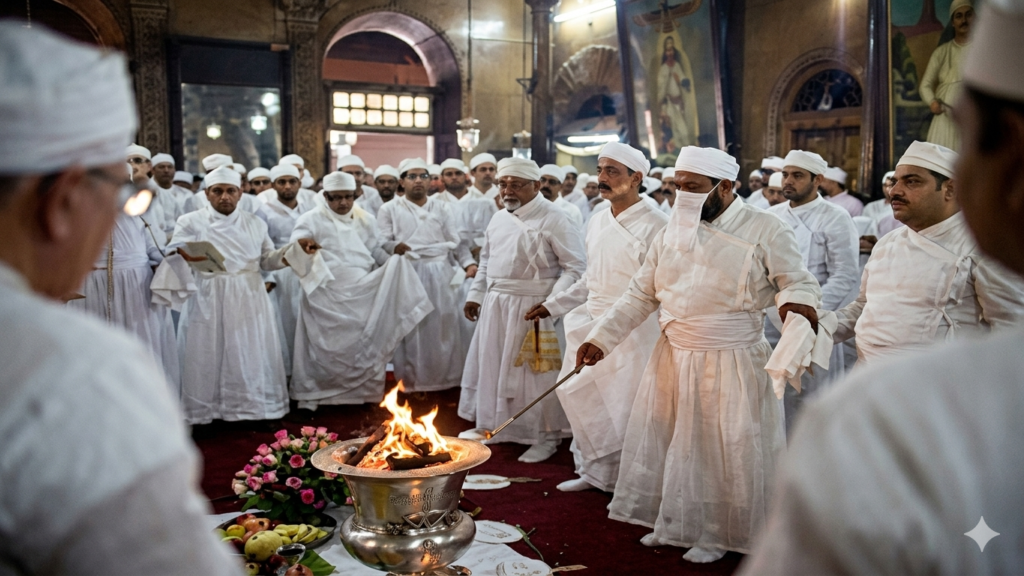
Before the rise of Islam in the seventh century, most Iranians followed Zoroastrianism. After the Muslim conquest of Persia in the seventh century, Iran gradually converted to Islam over several centuries. During this period many Zoroastrians migrated to India to escape persecution and came to be known as the Parsis. Today the population of Zoroastrians in Iran is extremely small—around 0.03 percent of the population—and India has a larger Parsi community than Iran.
After the establishment of Islamic rule, Iran was governed by several Muslim dynasties. A major turning point came in 1501 when the Safavid dynasty came to power and declared Shia Islam as the state religion of Iran. In the eighteenth century, Nader Shah of the Afsharid dynasty briefly ruled Iran and became famous for his invasion of India in 1739.
Iran was never formally colonized by Western powers, although both Russia and the United Kingdom competed for influence there during the nineteenth century. The Qajar dynasty came to power in 1794 and ruled Iran until 1925. It was followed by the Pahlavi dynasty, which ruled from 1925 to 1979. The Pahlavi rulers attempted to modernize Iran through reforms such as the White Revolution, which introduced land reforms, modernization programs, and greater rights for women.
These reforms were strongly opposed by conservative religious leaders. One of the most prominent critics was Ruhollah Khomeini, a Shia cleric who was exiled by the Pahlavi regime. In the Iranian Revolution of 1979, the Pahlavi monarchy was overthrown and Iran was declared the Islamic Republic of Iran.
Ruhollah Khomeini served as the first Supreme Leader until his death in 1989. After him, Ali Khamenei became the Supreme Leader of Iran. Ali Khamenei was killed in joint attack by Israel and United States and now his son Mojtaba Khamenei has been appointed supreme leader.