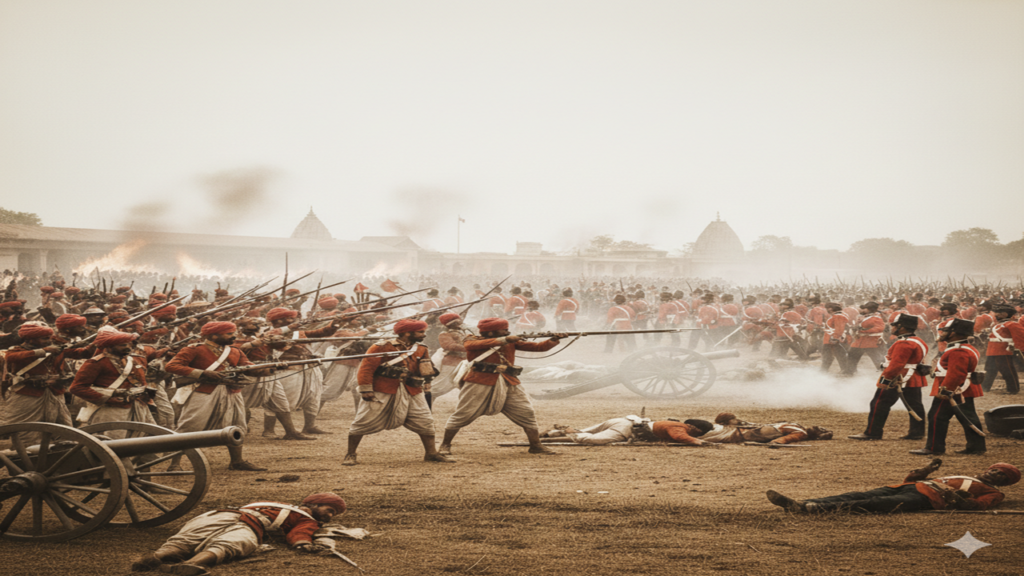
Hemu (Hemchandra Vikramaditya) is one of the most surprising figures in Indian history. From 1206 till the decline of the Mughal Empire, for nearly 600 years, Delhi was mostly ruled by Muslim rulers. Hemu was the only Hindu ruler who captured Delhi in 1556, though his rule lasted only about a month.
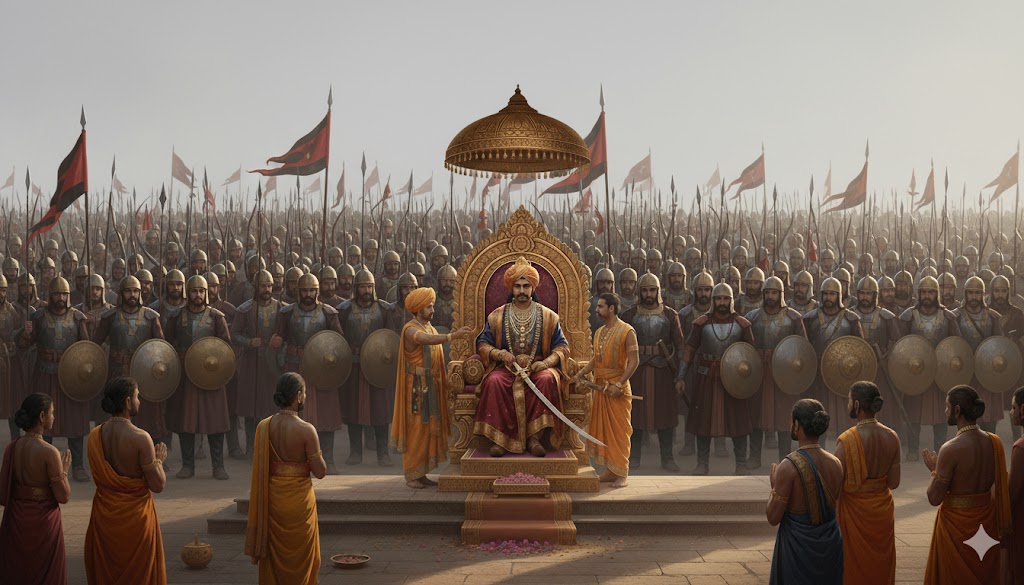
Hemu was not born into a ruling family. He was originally a trader who supplied food items to the army of Sher Shah Suri. Gradually, he rose in rank due to his administrative and military abilities. After the death of Sher Shah, during the reign of Islam Shah Suri, Hemu rose to become the prime minister (Wazir).
After the death of Islam Shah, a succession dispute broke out among the Sur rulers. Firoz Shah, the young son of Islam Shah, was killed, and Adil Shah Suri came to power. Hemu supported Adil Shah. Adil Shah was challenged by Ibrahim Shah Suri and Sikandar Shah Suri. In this chaotic situation, Humayun captured Delhi in 1555.
Humayun died on 26 January 1556. At the time of his death, his young son Akbar and Bairam Khan were in Punjab. Hemu, who was in Bengal, moved rapidly towards Delhi. He defeated Mughal armies at Bayana, Etawah, Sambhal, and Narnaul on his way. It is said that he won 22 battles. The Mughal governor of Agra vacated the fort without a fight.
Hemu reached Delhi and defeated the Mughal army in the Battle of Delhi (7 October 1556). He captured Delhi and at Purana Qila, he crowned himself Hemchandra Vikramaditya, instead of handing over power to any Afghan ruler.
Bairam Khan and the 13-year-old Akbar moved rapidly towards Delhi. In the Second Battle of Panipat (5 November 1556), Hemu confronted the Mughal army. Akbar and Bairam Khan stayed several miles behind the battlefield as a precaution. Unfortunately for Hemu, an arrow hit his eye, and he collapsed on the battlefield. He was captured almost unconscious, and Bairam Khan ordered his execution. His head was sent to Kabul to be displayed, and his body was hung at Purana Qila in Delhi.
Akbar and Bairam Khan did not stop there. Many of Hemu’s supporters were killed, and a minar of severed heads was erected, as described in the Akbarnama. Hemu’s elderly father was forced to convert to Islam, but he refused and was also executed.