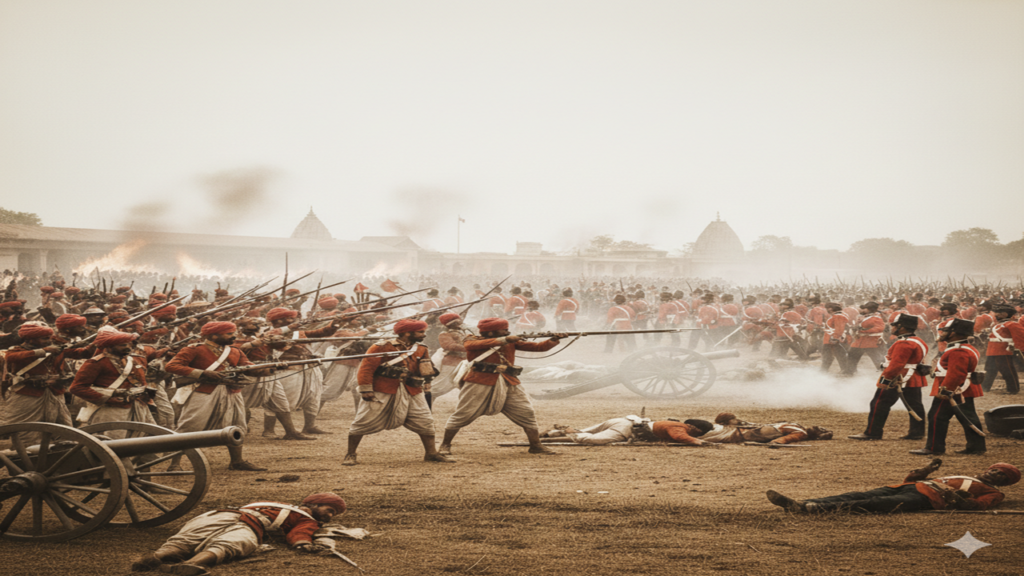
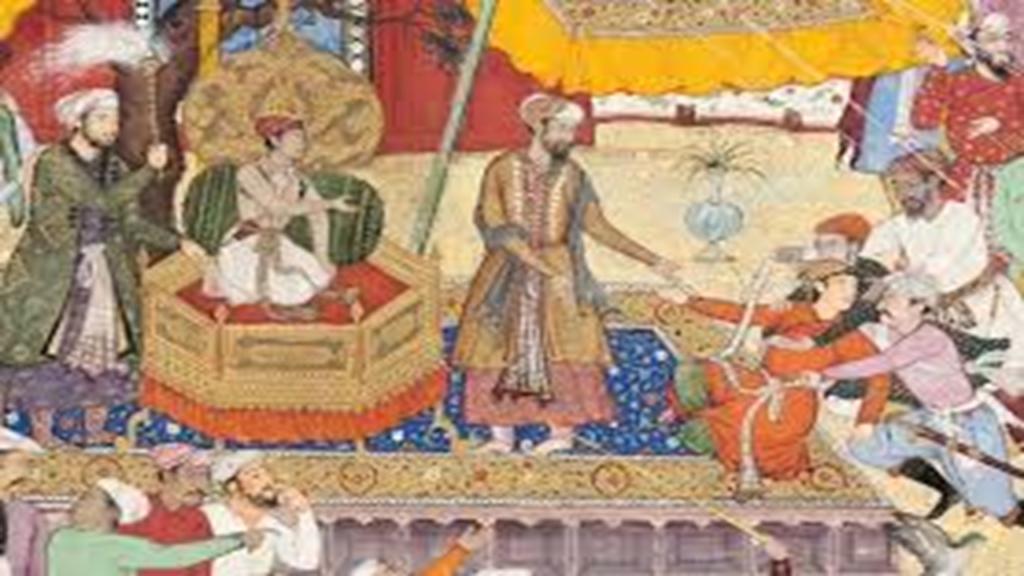
One of the greatest setbacks faced by the East India Company was in Afghanistan. The East India Company wanted to control Afghanistan because it feared that Afghanistan might develop friendly relations with Russia, which could threaten its vast colonial rule in India. Therefore, the East India Company initiated a military campaign against Afghanistan, but it turned out to be disastrous. Only one British soldier was able to return from the Afghan campaign; all others perished during the retreat.
At that time, Afghanistan was going through internal strife. Shah Shuja had been defeated by his brother and exiled. Subsequently, Dost Mohammad usurped power in Afghanistan. The East India Company wanted to reinstall Shah Shuja as a puppet ruler. A tripartite agreement was entered into among Ranjit Singh, Shah Shuja, and the East India Company. Sindh was forced to allow the Company’s army to pass through its territory.
In the Simla Manifesto, the East India Company announced its decision to invade Afghanistan. British forces entered Afghanistan through the Bolan Pass. In April 1839, the Company captured Kandahar. Later in 1839, British forces captured Ghazni. In August 1839, Kabul was captured, and Shah Shuja was placed on the throne.
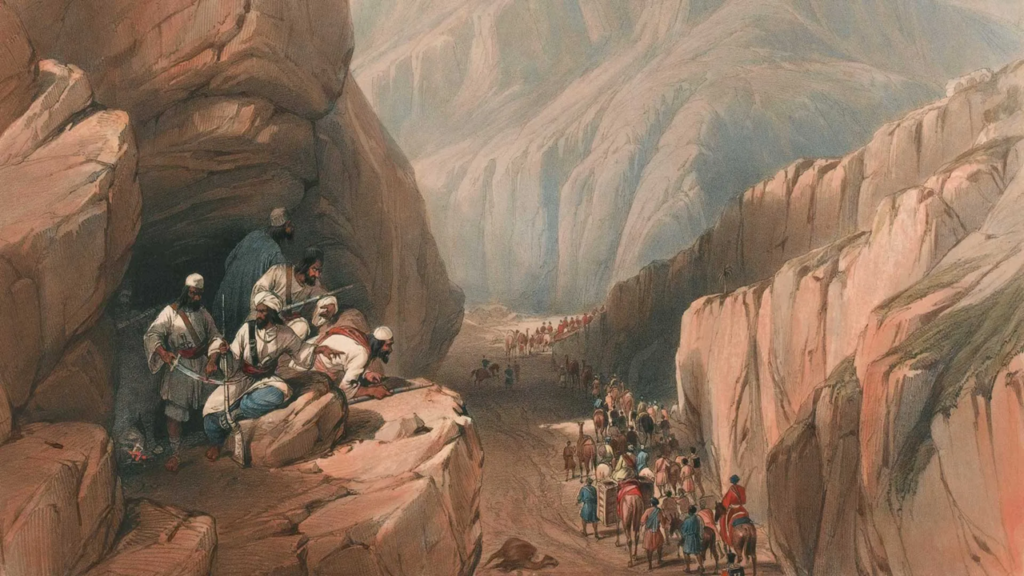
However, soon after, troubles began for the East India Company. The Company faced severe rebellion from Afghans, and several British officers were killed. British forces decided to retreat. Around 16,000 soldiers and civilians started their retreat. The terrain was extremely rough, and the winter conditions were severe. During the retreat, British forces were repeatedly attacked by Afghans. Most of the people were killed or died due to cold and disease. Only one soldier returned alive.
Thus, this campaign became one of the most disastrous military expeditions in British history and was widely criticized in Britain.