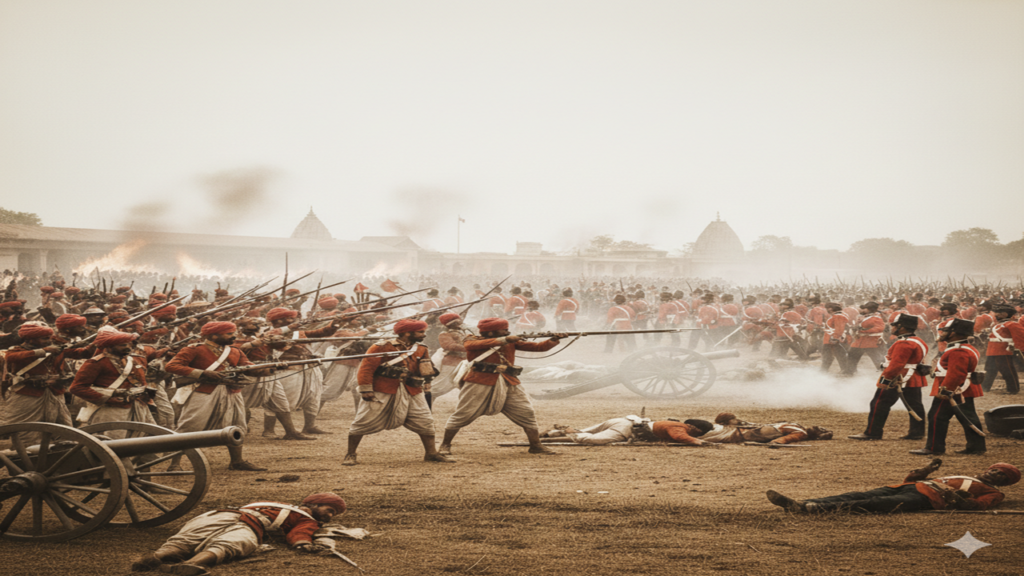
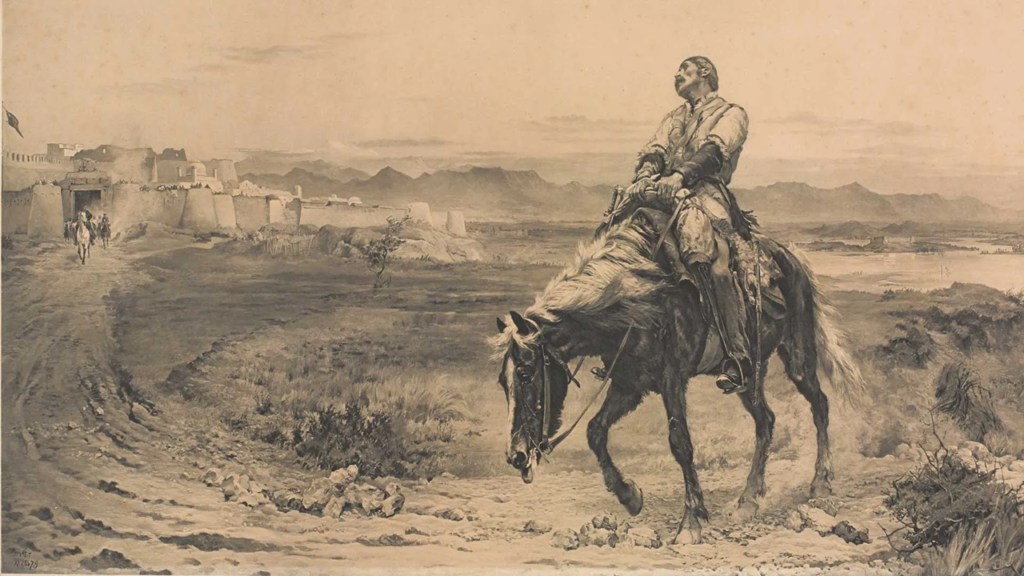
During the early 19th century, Assam was ruled by the Ahom dynasty. In addition, several other kingdoms existed in the North-East, including the Kingdom of Manipur, Tripura, Jaintia, and Kachari. In 1817, the Burmese army invaded the North-Eastern regions and took control of the Ahom kingdom, Cachar (Chachar), and Manipur. They did not stop there; the Burmese army also entered British-controlled territories such as Sylhet and Chittagong, posing a serious threat to British interests.
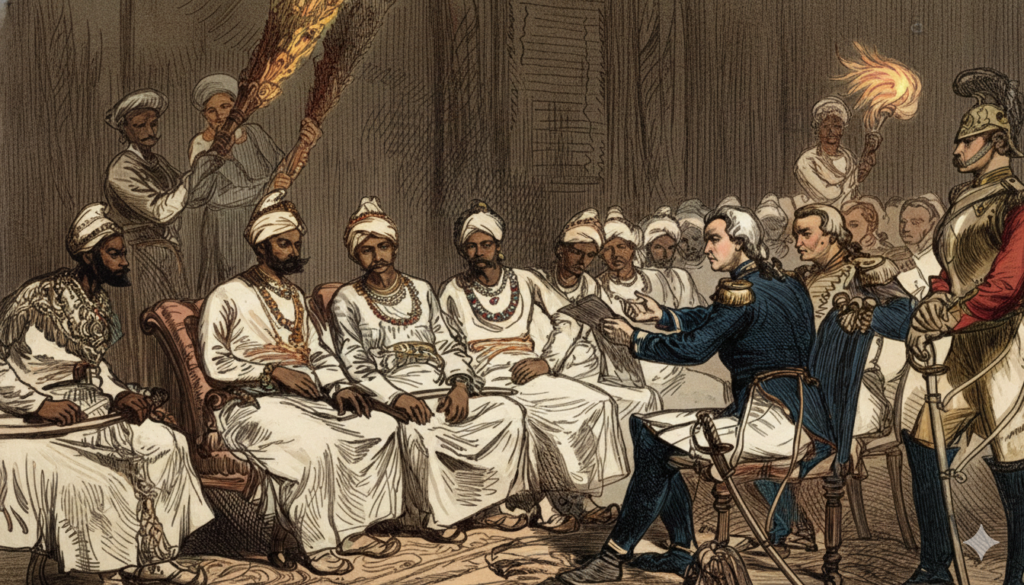
The East India Company initially tried to resolve the conflict diplomatically, but its efforts failed. The Burmese refused to withdraw from Assam and Manipur. Ultimately, this dispute led to the First Anglo-Burmese War (1824–1826).
The East India Company opened three military fronts against Burma – (i) Assam and Manipur (ii) The Arakan coast, and (iii) Lower Burma.
The Company used its naval power extensively in this war. Burma was defeated, and the Treaty of Yandabo (1826) was signed. The cost of the war was so enormous that the East India Company had to raise loans from British banks.
Under the Treaty of Yandabo, Burma vacated Assam, Manipur, and Cachar, which it had occupied. Burma also ceded Arakan and Tenasserim, which were its own territories. In addition, Burma had to pay a huge war indemnity to the East India Company.
After the treaty, Assam was restored to the Ahom rulers, but in 1838 it was annexed by the British Empire. Cachar was initially restored to its earlier ruler, but it was annexed by the British in 1832 on the ground of misrule. Manipur was restored to its ruler and made a protected (princely) state under British suzerainty.